
 COFFEE
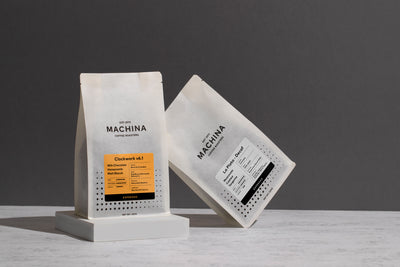







We’ve always found that the best partnerships start with a shared mindset, and it’s always a real pleasure to work with a team that approaches their craft with the same level of care that we bring to every batch of coffee we roast.
The Free Company is a perfect example. Located just outside Edinburgh, they are known for their Green Michelin-starred restaurant; but beyond that, they're a working blueprint for a circular food system, with every decision they make rooted in the health of the land.
On a farm where the menu is dictated by the morning's harvest, every element must earn its place on the table. We’re proud to supply the coffee for their dining room, seeing it as the final note in an experience that prioritises provenance above all else. We sat down with the team to hear about the huge journey the farm's been on over the past decade, and why the future of hospitality depends on looking back at older, more regenerative ways of working.
How did the idea for The Free Company first take root, and how has it evolved since then?
The Free Company began when brothers Angus and Charlie Buchanan-Smith decided to take on their family farm in 2016. There has been a farm on this land for hundreds of years, passed down through generations. Their father had been running it as a dairy, but like many at the time, the business struggled during the drop in milk prices in the early 2000s and ultimately went bankrupt. The farm was then leased out and later lined up for sale.
Despite being strongly advised not to get into agriculture, the brothers stepped in to save the family farm, taking on a ten-year lease and starting again from there. We have since gone on to buy the farm outright.
From the outset, it was about doing things a bit differently. It was very hands-on and fully DIY, open to trying new approaches while still drawing on older ways of working with the land.
The idea was always broader than just farming. Early on we had makers on site alongside the food and agriculture, from pottery to furniture making, all tied together by an interest in land, craft and design.
The first iteration was a small seasonal restaurant in the hayloft. It opened for a few weeks at a time, three to four times a year, running around 40 covers per night, built around a single sitting and a set menu. It was much more of a full evening experience. We would talk through the menu in detail, particularly around provenance and the wider food system, and it often opened up conversation across the table. It felt like more than just a meal out.
At the same time, we started growing food on a very small scale and gradually introduced livestock.
Those elements grew together over time. One of the early ideas was the Pig Club, a monthly subscription where people received a share of pork. It helped build a more direct relationship between what we were producing and how it was being consumed.
The pandemic was a turning point. With the restaurant closed, we focused on production and scaled up the market garden for veg boxes. By the time we reopened, that had grown to around five acres, alongside sheep, cattle and some wholesale supply.
At the same time, a lot of work went into restoring the buildings, mostly done in-house and using timber from the land. In 2021 we opened the Milking Byre, which allowed us to move to a year-round restaurant.
In 2024, we shifted the main restaurant to a more flexible à la carte format. The earlier format had been a full evening experience, which worked well for atmosphere and depth, but over time we felt it could also be a barrier for people looking for something a bit more relaxed. We have kept that original single sitting, set menu approach alive through our seasonal Feasting Sessions.
Since then it has kept evolving, but the core idea is the same. We are trying to explore an alternative to more conventional food and hospitality systems.
A big part of that is selling directly. Stripping out unnecessary layers and keeping a clearer link between what is produced and what people eat. In the restaurant especially, that connection is immediate, with food coming from fields just metres away.
It is not just about the product. It is about getting people to think about where their food comes from and what it is worth.
It has been nearly ten years, but it still feels like we are only just getting started!
What does ‘regenerative’ actually look and feel like on the farm?
For us, it really starts with soil. Everything comes back to how we manage and improve it over time.
The land had been quite intensively managed before, and that had taken its toll. The soil structure, plant diversity and overall balance were not where we wanted them to be. A lot of the last ten years has been about rebuilding that. We went through organic conversion and achieved full status a couple of years ago, but that was only one step in a longer process.
A big part of it is about being a bit more hands-off than conventional systems, where that makes sense. Rather than trying to control everything, it is about working with natural processes and letting the system rebuild over time. That does not mean doing nothing. It is still managed carefully, but the focus is on supporting the system rather than forcing it, and allowing natural cycles to do more of the work.
In practical terms, that includes limiting soil disturbance. In more conventional systems, regular ploughing turns the soil, which can break down structure and release stored carbon back into the atmosphere. We try to minimise that as much as possible, keeping the soil intact and supporting the biology within it. In the market garden, that takes the form of a no-dig approach, building soil health without turning it.
Alongside that, it is about building organic matter through plant roots and living systems, so the soil is holding more carbon rather than losing it.
With livestock, it is more involved than it might look. All animals are grass-fed, but more importantly they are managed through rotational grazing, often moving daily. That gives pasture time to recover, encourages deeper rooting, and helps rebuild soil structure and fertility over time.
Carbon sequestration sits within that wider picture. Agriculture comes with emissions, some of which are hard to avoid, so the aim is to balance that through healthier soils and better land use.
Over time, you start to see the results. There is more plant diversity, more insects and more birdlife. It feels more balanced.
Seasonality plays into it as well. The restaurant is driven by what is coming out of the field that day, so the menu changes constantly depending on what is available.
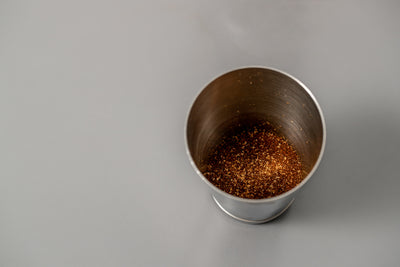
That links directly to waste. Very little leaves the site. Food waste is composted or fed to livestock so nutrients stay within the system. The same applies to things like coffee. Spent grounds are either used in the kitchen or added to compost, where they help build fertility back into the soil.
We carry that thinking through everything else as well. Sourcing as locally as possible and avoiding unnecessary transport where we can.
Ultimately, it is about improving the land year on year while producing good food, and showing that there are other ways of doing things in practice.
You recently received a Green Michelin Star! Tell us about what that represents?
We were really honoured to receive the Michelin Green Star this year. For us, it reflects the work the whole team has been putting in over a long period of time, much of it behind the scenes and not always visible to guests.
What makes it meaningful is that it recognises more than just the food on the plate. It looks at how the whole business operates, from how we farm and source ingredients, to how the kitchen works with what is coming out of the field, to how we approach waste, energy and materials across the site.
A lot of those decisions are fairly unglamorous and incremental, so to have that recognised at that level is hugely encouraging for the team.
At the same time, we do not see it as an end point. It shows we are heading in the right direction, but there is still a lot more to do. The way we think about food systems, sustainability and hospitality is always evolving, and we are still learning.
If it helps us share what we are doing more widely, that is probably the most valuable part. Not in terms of promoting ourselves, but in showing that there are different ways of building a restaurant and a farm together, and that those approaches can be viable.
Ultimately, it is just a really nice moment for the team, and a bit of encouragement to keep pushing things forward.
The dining room has such a specific atmosphere - how do you want people to feel when they step inside?
The Milking Byre is set up quite deliberately. From the beginning, we’ve centred the dining experience around long communal tables, first in the hayloft and now in the main space.
The aim is to bring people together rather than separate them out. It encourages conversation, not just within a group but often across the table.
A big part of what we’re interested in is how people connect to food, where it comes from, what it’s worth, and the system behind it. Those conversations tend to happen more naturally when people are sitting together like that.
That carries through the whole experience. People are more aware of what’s around them, what’s being served, and what others are eating.
It creates a different atmosphere. There’s more energy in the room and more of a sense that people are part of something together.
It’s not for everyone, but for a lot of people that’s exactly what they come for.
Ultimately, we want people to feel relaxed, welcome and included.
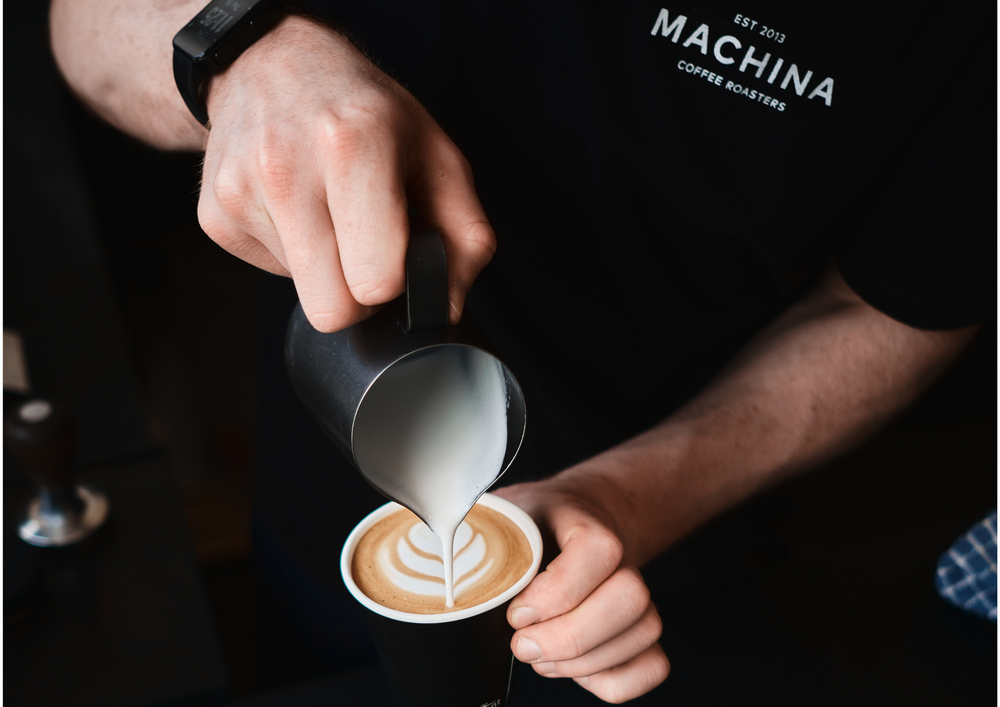
We’re proud to be the coffee of choice here - how does it fit into the flow at The Free Company?
Coffee matters to us in the same way the food does. It’s not an afterthought, it’s part of the overall experience.
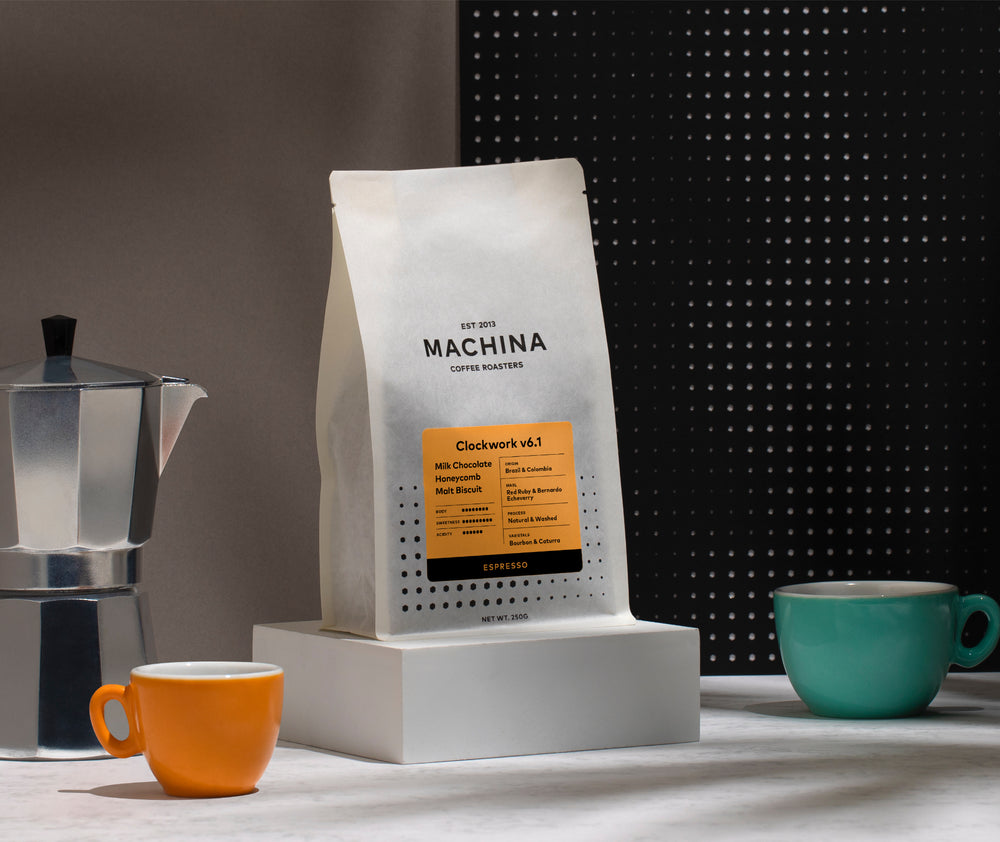
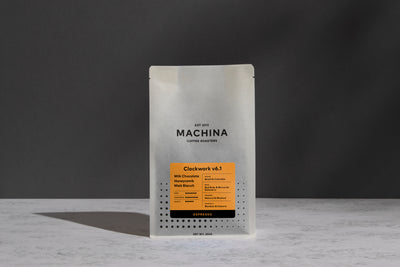
Working with Machina feels like a natural fit. There’s a shared approach around provenance, transparency, and making sure the people behind the product are treated fairly, and that alignment is important to us.
In terms of how it fits into the flow, it’s often the final part of the meal, but it’s not treated as an add-on. It’s another chance to deliver something considered, at the same level as everything that’s come before it.
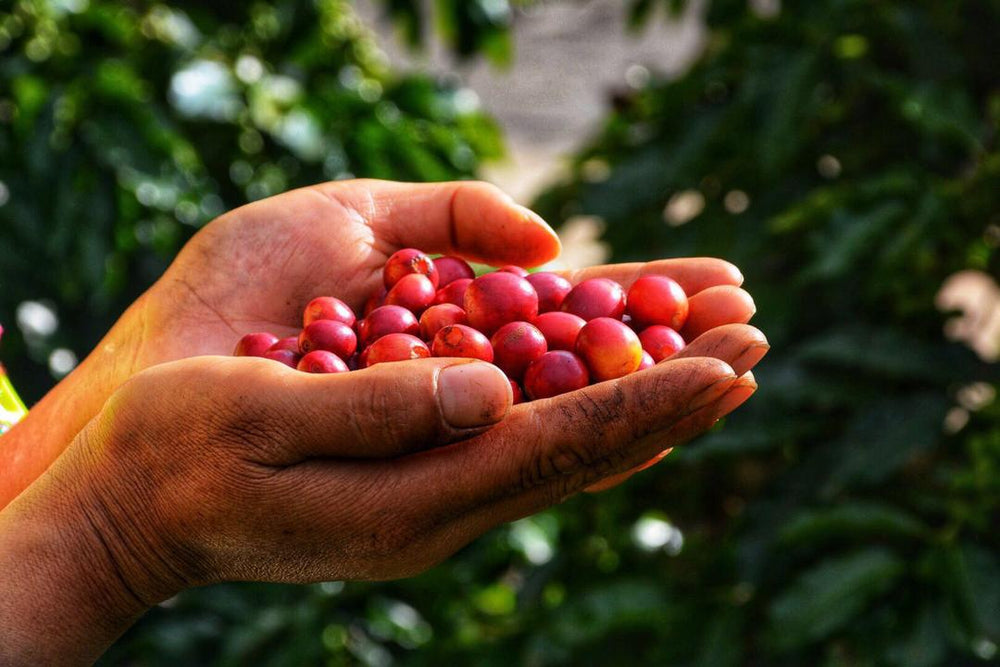
It also sits within the wider way we think about sourcing. We try to keep supply chains short and build direct relationships where we can. Coffee obviously can’t be grown here, but working with the right roaster means we can still prioritise traceability and quality.
Ultimately, it comes back to consistency. If we’re asking people to think about where their food comes from, it makes sense that the same applies to what’s in the cup at the end of the meal.
What’s next for the farm that you’re particularly excited about?
There’s quite a lot in progress at the moment. A big focus is accommodation on site, with our first rooms opening in the next couple of months and more to follow over the next year or so.
Alongside that, we’re building a sauna and a natural swimming pond, hopefully opening later this year.
The restaurant and events continue to develop as well. We run monthly Courtyard Sessions, which are a more informal midweek offering, and seasonal Feasting Sessions, which return to our earlier format of a single sitting, set menu and more of a full evening experience. They give us a chance to try different ideas and keep things moving.
More broadly, it’s about continuing to build something that feels joined up, where the farm, restaurant and wider project support each other.
We love your ‘closed-loop’ approach - like composting coffee grounds back into the soil. What’s one simple thing people can do at home to live a bit more regeneratively?
The simplest place to start is just being a bit more aware of what you’re buying and what you’re throwing away.
If you can, try to buy more locally and in season. The best way is directly from producers or through a farmers’ market. But even in a supermarket, you can still make that choice by checking where things come from and opting for local where possible. That naturally brings you closer to what’s actually in season.
The other big one is food waste. Try to use what you buy and keep waste to a minimum. And if you do have waste, make sure it goes into a food waste bin so it can be properly processed. In most cases that’s turned into energy or fertiliser, so it’s going back into the system rather than being lost.
If you have the option, composting at home is even better. Something as simple as coffee grounds can go back into the soil and become part of that cycle again.
It doesn’t have to be complicated. Small changes in how you shop and how you handle food at home add up quite quickly.
- Liam Flaherty, Operations Manager at The Free Company, in conversation with Sophie Jones.